

 EU
EU  Romania
  Bulgaria
  Slovenia
  Sweden
  Spain
Spain  Portugal
  Poland
  Belgium
  Netherlands
  Ireland
  Luxembourg
  Italy
Italy  France
  Estonia
  Cyprus
  Germany
  Greece
  Denmark
  Hungary
  Austria
  Austria by investment
  Croatia
  Malta
Malta  Italy
Italy  France
  Finland
  Germany
  Sweden
  Spain
Spain  Portugal
  Poland
  Netherlands
  Sweden
  France
  Finland
  Portugal
  Poland
  Italy
Italy  Malta
Malta  Germany
  Netherlands
  Denmark
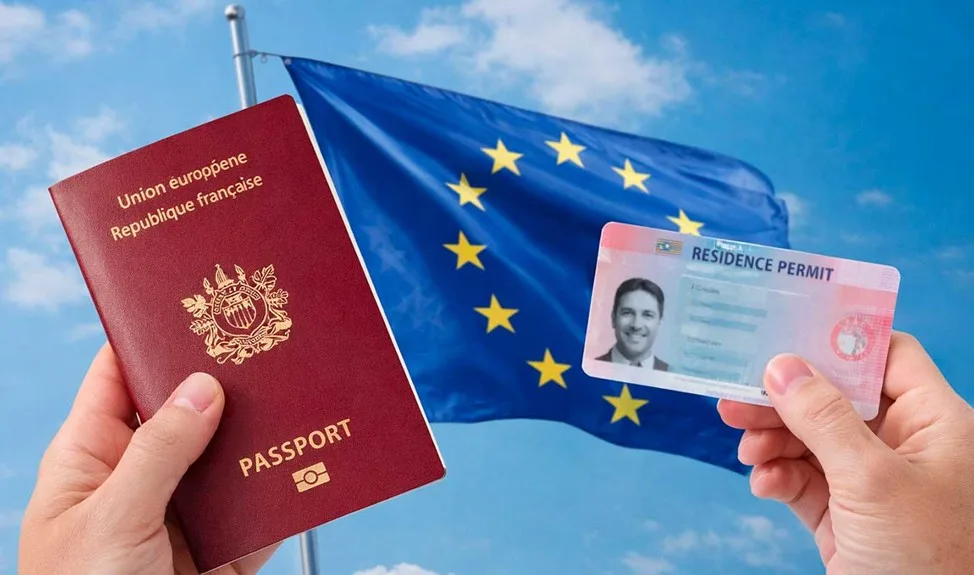
 For many individuals considering relocation to Europe, one of the most common questions is whether to pursue residency or full citizenship. While both statuses provide legal access to living in the European Union, they offer very different rights, obligations, and long-term benefits.
In 2026, understanding the distinction between EU residency and EU citizenship is essential for making the right strategic decision.
What Is EU Residency?
EU residency refers to a legal right granted by a specific EU country that allows a non-citizen to live there for a defined period. Residency may be temporary or permanent, depending on how long you have legally resided in the country.
A residence permit typically allows you to:
- Live legally in the issuing country.
- Work or run a business (depending on permit type).
- Access local healthcare and education.
- Travel short-term within the Schengen Area.
However, residency does not automatically grant the right to live or work in all EU countries. Your rights are primarily limited to the country that issued your permit.
Temporary residency often lasts one to three years and must be renewed. Permanent residency may be granted after several years of legal stay, usually five years, but still does not provide full EU-wide rights.
What Is EU Citizenship?
EU citizenship is acquired by becoming a national of one of the 27 EU member states. Once you obtain citizenship in any EU country, you automatically become an EU citizen.
This status grants significantly broader rights, including:
- The right to live, work, and study in any EU member state.
- Full freedom of movement without additional permits.
- Political rights, such as voting in local and European Parliament elections.
- Stronger global mobility through an EU passport.
- Long-term security without renewal requirements.
Unlike residency, citizenship is typically permanent and can often be passed on to future generations.
Mobility Differences
One of the most important distinctions between residency and citizenship lies in mobility.
Residence permit holders may travel within the Schengen Area for short stays, but they cannot automatically relocate or work in another EU country without applying for a new permit.
EU citizens, on the other hand, can move freely across all member states without needing additional immigration approvals. This makes citizenship significantly more flexible for individuals planning long-term European mobility.
Work and Business Rights
A residence permit usually grants work rights within the issuing country only. If you want to expand business operations or accept employment in another EU country, additional legal steps are required.
EU citizens enjoy unrestricted access to the entire EU labor market. They can establish companies, work in any member state, and operate across borders without additional permits.
Long-Term Security
Temporary residency requires renewal and compliance with ongoing eligibility conditions. If financial requirements are not met or regulations change, residency status could be affected.
Citizenship offers a higher level of permanence. Once granted, it generally cannot be revoked except in extreme legal circumstances. It provides stronger legal protection and political rights within the EU.
Pathway from Residency to Citizenship
For many applicants, residency is the first step toward citizenship. After maintaining legal residence for a required number of years — typically between five and ten depending on the country — individuals may become eligible to apply for naturalization.
Requirements often include language proficiency, integration, stable income, and a clean criminal record.
Therefore, residency can serve as a strategic entry point for those planning long-term settlement in Europe.
Which Option Is Right for You?
The choice between residency and citizenship depends on your personal goals.
If you are seeking relocation flexibility without immediate plans for full integration, residency may be sufficient. It allows legal stay, employment, and access to services within a specific country.
If your objective is maximum mobility, generational security, and unrestricted access to the entire European Union, citizenship offers significantly broader advantages.
Both residency and citizenship provide legal pathways into the European Union, but they are not interchangeable. Residency offers structured access to one country, while citizenship unlocks full European rights and long-term permanence.
Understanding these differences in 2026 allows individuals and families to make informed decisions aligned with their mobility, business, and lifestyle goals.